Living with PKU
An information guide for people living with phenylketonuria and their families — from newborn screening and the first years, through school, adulthood and pregnancy.

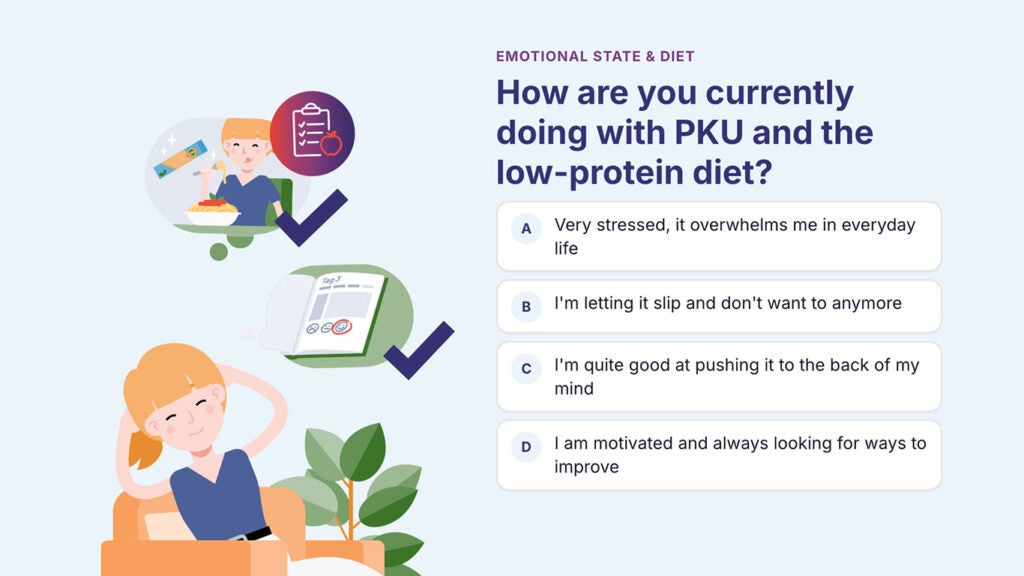
This hub explains phenylketonuria in plain language. Read the basics, page through the patient brochure, or check what you already know in a short quiz.
Here is what phenylketonuria is, in plain terms. For anything about your own care, your metabolic centre is the place to go, and the country sites below carry the detail in your language.
An enzyme called PAH normally breaks down phenylalanine (Phe), a building block of dietary protein. In PKU that enzyme does not work fully, so Phe builds up in the body.1
PKU is passed on genetically. When both parents carry the altered gene, a child can be born with PKU, often without the family knowing beforehand.2
Around 1 in 10,000 people in Europe live with PKU, one of the more common rare inherited metabolic conditions.3
PKU cannot be seen, but newborn screening detects it right after birth. Found early and well supported, it is manageable throughout life.4
This is general awareness information and is not a substitute for medical advice. For questions about your own situation, please speak to your doctor or metabolic centre.
Two ways in: page through the patient brochure on screen, or check what you already know in a short quiz. Both are general awareness materials and do not replace advice from your healthcare team.
An information guide for people living with phenylketonuria and their families — from newborn screening and the first years, through school, adulthood and pregnancy.
Ten short questions on how PKU works, how it is found and how it is managed. Every answer comes with a plain-language explanation. Nothing is stored and nothing is scored publicly.
Intended audience. This platform is intended for members of the public in Europe. The brochure and the quiz are general disease awareness materials. They do not provide medical advice and do not replace advice from your treating healthcare professional. Please always speak to your doctor or metabolic centre about your own care.